Designing a unified authorization experience that enables people and AI agents to securely perform work across Microsoft Security without navigating fragmented, product specific access models.
Unified roles
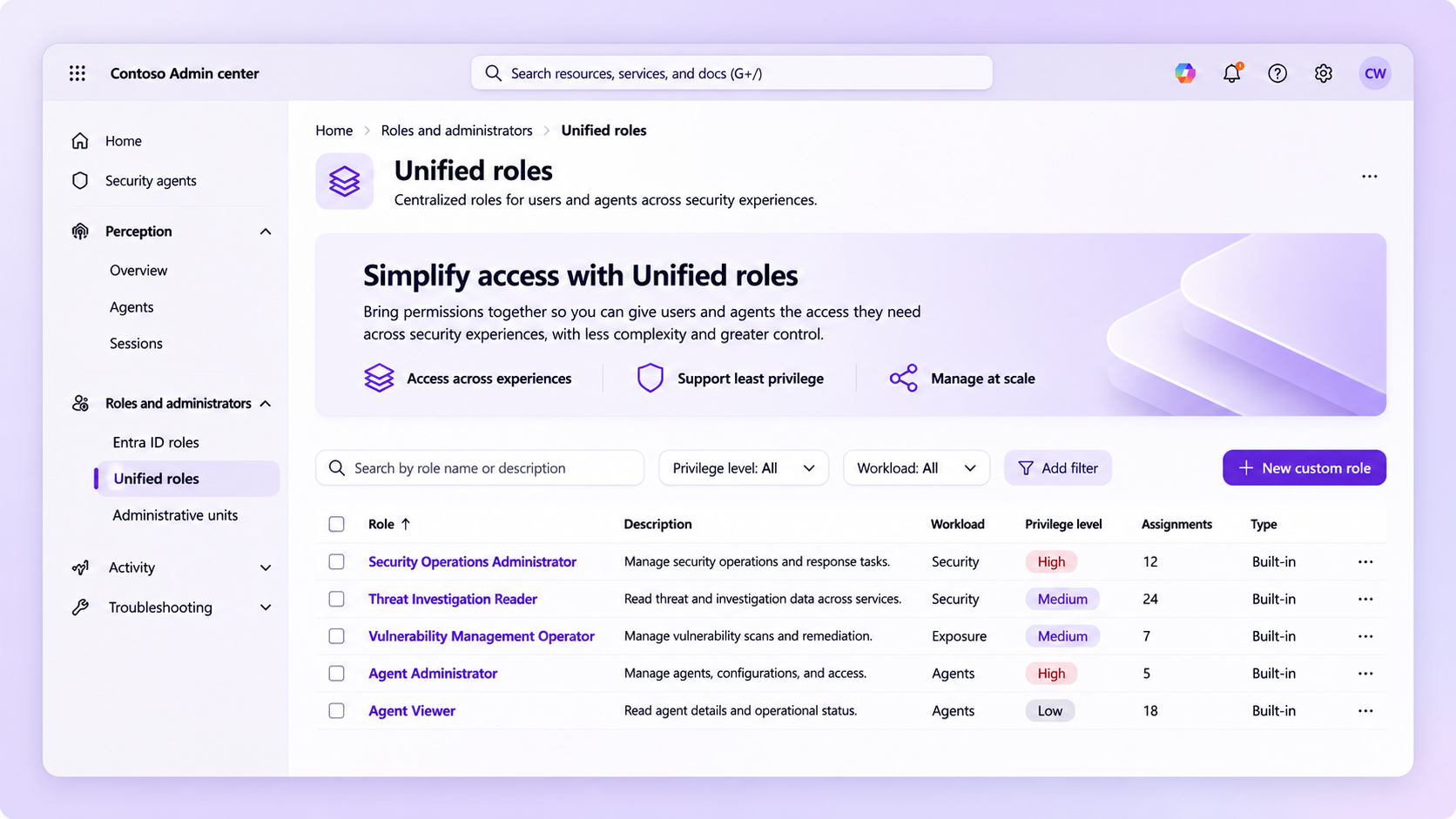
Designing access across an evolving security ecosystem
Traditional role based access control was built around individual products, each with its own permissions, roles, and authorization requirements. As security responsibilities increasingly span products and AI agents, this fragmentation creates barriers to completing work and can encourage unnecessarily broad access.
Unified Roles represents a shift toward a shared authorization model organized around the work being performed, enabling more consistent access decisions while preserving least privilege.
As the lead designer for Unified Roles experiences across Entra and emerging agent workflows, I translate this broader strategy into actionable product experiences. My work spans role discovery, assignment, scope management, and establishing consistent patterns across product boundaries.
When access follows the product, not the work.
Security responsibilities increasingly span products, but access control remains organized around individual systems, each with its own roles, permissions, and approval requirements. Administrators must coordinate access across multiple experiences to complete a single job, often relying on broader privileges than necessary to overcome these barriers.
A single security task can require access across multiple products, each with different roles, permissions, and administrative workflows. For emerging agent experiences, this complexity extends beyond the person performing the work to the agent's own identity, permissions, and resource boundaries.
How might we enable people and AI agents to perform security jobs across product boundaries with the right permissions, at the right scope, without sacrificing clarity, control, or least privilege?
Designing access around the job to be done
Moving toward a unified authorization model requires more than consolidating roles and permissions. The experience must reflect how security work spans products, support least privilege for both people and AI agents, and make access decisions understandable wherever work happens. Three principles guide this direction.
Access follows the job
Enable administrators to delegate the permissions required to complete a security task across products, rather than assembling access separately within each system.
Least privilege for people and agents
Grant identities only the permissions they need, at the appropriate scope, without introducing unnecessary access.
One model, wherever work happens
Establish a consistent way to understand privileges, make access decisions, and manage permissions across security experiences.
From fragmented permissions to a connected access lifecycle
I approached Unified Roles as a connected access management experience, translating a complex authorization model into a sequence of understandable decisions. From identifying the access required for a job to assigning roles, defining scope, and reviewing privileges, the experience establishes a consistent foundation across product boundaries while accommodating different administrative workflows.
Access aligned to the job
A connected framework for enabling people and AI agents to perform security work with appropriate access.
01 Understand Identify the job and who needs access
Key questions
- What job needs to be completed?
- Who or what needs to perform it?
- Which security experiences does the job span?
02 Define Determine the access required
Key questions
- What permissions are necessary to complete the job?
- What is the minimum level of privilege required?
- Does the access model account for people and agents?
03 Assign Grant the right access to the right identity
Key questions
- Which person or agent should receive access?
- Which role provides the required permissions?
- Should access be standing, eligible, or time bound?
04 Scope Establish boundaries and oversight
Key questions
- Which resources should the access apply to?
- Where should access be restricted?
- What approvals or oversight are appropriate?
05 Review Evaluate whether access remains appropriate
Key questions
- Is the access still necessary?
- Are the permissions and scope still appropriate?
- Should access be maintained, adjusted, or removed?
Conceptual experience framework. Not all capabilities are available in the initial Public Preview.
Making unified access work across product boundaries
A shared authorization model doesn't mean every product needs the same interface. The challenge was determining where access should be managed centrally and where it needed to become part of an existing workflow.
I led design decisions across Entra and emerging agent experiences, shaping how administrators discover roles, provision access during setup, and manage permissions over time.
The three decisions below show how I balanced consistency, usability, and security across product boundaries.
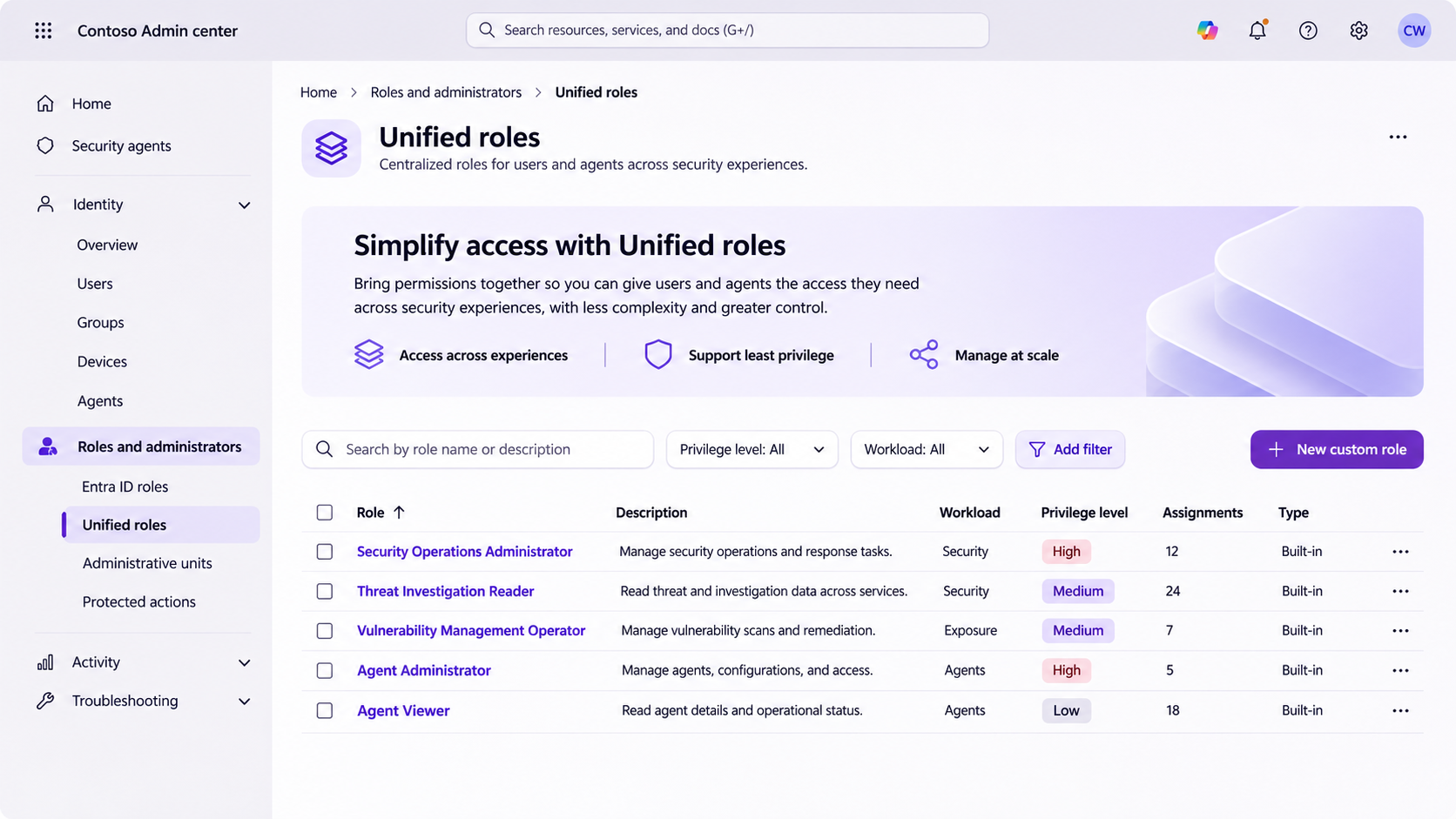
Integrating Unified Roles into Entra's existing navigation
Introducing a cross-product authorization model meant finding a place for it within established administrative workflows.
Challenge
Make cross-product roles discoverable without confusing them with existing Entra-specific roles.
Tradeoff
A separate destination could distinguish the new model, but would introduce another administrative entry point.
Decision
Place Unified Roles alongside Entra ID Roles, preserving familiar navigation while making the distinction between models clear.
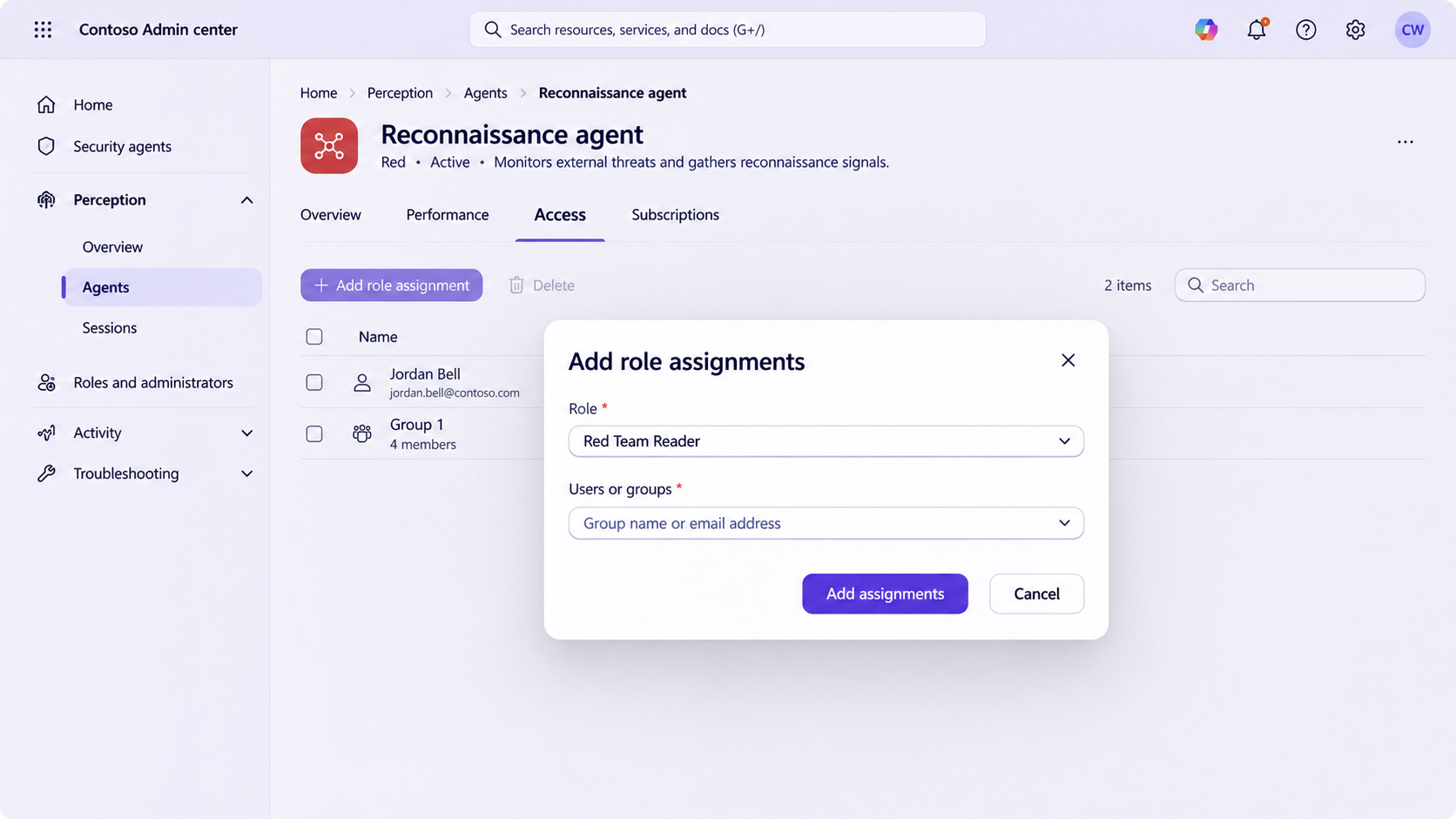
Balancing automated provisioning with explicit access controls
Agent onboarding required different provisioning approaches depending on the authorization requirements and level of privilege involved.
Challenge
Reduce repetitive administrative setup while maintaining appropriate control over agent permissions.
Tradeoff
Greater automation reduces friction, but not every authorization model supports safely inferring the required access.
Decision
Support optional inferred provisioning where appropriate, while requiring explicit assignment for more privileged workflows.
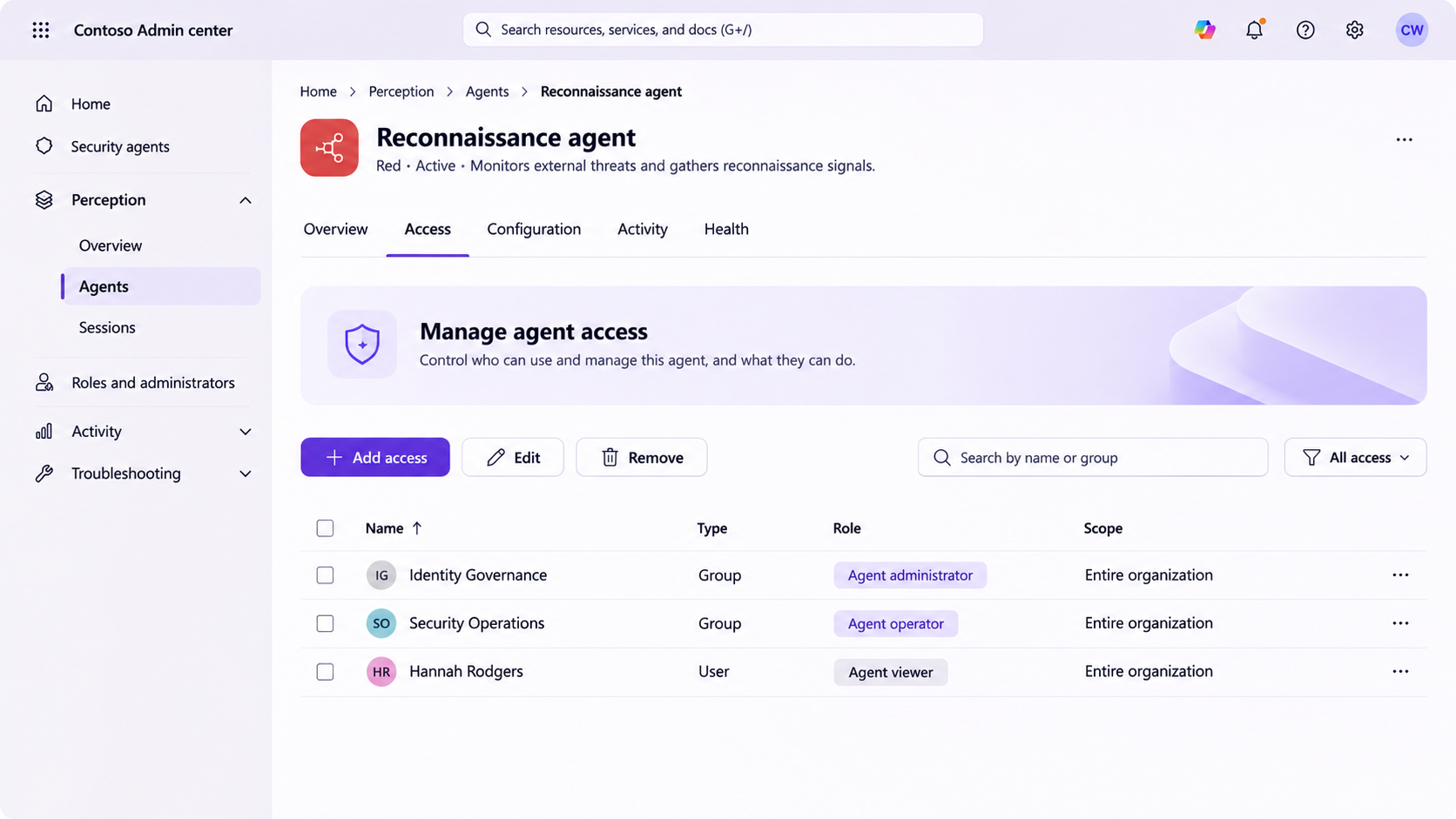
Managing agent access where the work happens
Managing access extends beyond initial setup. Administrators need to understand and update agent permissions as responsibilities change.
Challenge
Make ongoing access management accessible within the context of an individual agent.
Tradeoff
Centralized administration supports consistency, but can separate access decisions from the resource being managed.
Decision
Introduce contextual agent access management that complements centralized role administration rather than duplicating it.
Impact
Unified Roles reached Public Preview, establishing a foundation for more consistent authorization across Microsoft Security.
As lead designer across Entra and emerging agent workflows, I translated the platform strategy into experiences for role discovery, access provisioning, and ongoing agent management.
Evolution
Public Preview was an initial milestone, not the completion of the broader vision.
My ongoing work focuses on improving consistency across products, accommodating evolving human and agent access needs, and making authorization easier to understand and manage at scale.